
When estrogen levels shift and skin changes during menopause, it’s natural to want simple, gentle solutions that can be made at home. Dryness, redness, and even breakouts often appear during this stage of life, leaving many women searching for natural, inexpensive options that feel safe.
Ingredients like honey, avocado, and oatmeal are common in home remedies and are generally safe for most people. However, dermatologists emphasize that these remedies are not substitutes for evidence-based treatments. To help guide the way, Winona’s experts reviewed the evidence and weighed in on what’s safe, soothing, and dermatologist-approved.
The Golden Rules of DIY Skincare: A Doctor’s Advice on Safety
Before applying any skincare products, like masks or scrubs, the American Academy of Dermatology (AAD) and the FDA both recommend following a few simple rules:(1)(2)(3)
Always patch test. Apply a small amount of the mixture to the inside of the wrist or arm. Wait 24 hours to check for redness, itching, or irritation before using it on the face. Even gentle ingredients like yogurt or honey can cause unexpected reactions.
Know the ingredients. Natural doesn’t always mean safe. Lemon juice, baking soda, and undiluted essential oils, for example, can damage the skin barrier or cause burns. Dermatologists often remind patients that poison ivy is “natural,” too — so natural is not the same as safe.
Start with a clean base. Wash your hands and use clean bowls, spoons, or jars. Bacteria can multiply quickly in homemade mixtures, and applying them to compromised menopausal skin can worsen irritation.
Make fresh batches. Homemade products don’t contain preservatives. Even if kept in the fridge, bacteria and mold can grow within days. Always make just enough for one use and discard leftovers.
Keep expectations realistic. DIY skincare can hydrate, calm, and temporarily improve the skin’s appearance. But it won’t replace prescription treatments for deeper wrinkles, hormonal acne, or advanced pigmentation.
DIY Face Masks and Treatments for Common Menopause Skin Concerns
Dermatologists agree that some kitchen ingredients can safely support skin health if used correctly. Here are a few science-backed recipes tailored for common menopausal skin concerns.
For Dryness and Dehydration: A Hydrating Avocado & Honey Mask
½ ripe avocado, mashed
1 tsp raw, unprocessed honey
Mix until smooth. Apply to clean skin and leave on for 15 minutes; then rinse with lukewarm water.
Why it works: Avocado is rich in healthy fats, vitamins A and E, and antioxidants that can help replenish the skin barrier. Honey is a natural antibacterial and humectant — it draws water into the skin and helps soften dry patches. Together, they may soothe dry skin, restore suppleness, reduce inflammation, and promote healing.
For Redness and Irritation: A Soothing Colloidal Oatmeal & Yogurt Mask
2 Tbsp finely ground colloidal oats
1 Tbsp plain, unsweetened yogurt
Stir together and apply as a mask for 10–15 minutes.
Why it works: Oatmeal contains avenanthramides, compounds that have been shown to reduce redness and itching. Dermatologists may recommend colloidal oatmeal baths for skin inflammation, eczema, and rosacea. Yogurt provides lactic acid, a gentle exfoliant, plus probiotics that may help support the skin’s microbiome.(4)(5)(6)
Caution: If lactose-intolerant or allergic to milk, skip the yogurt and use aloe vera gel instead.
For Hormonal Acne and Clogged Pores: A Tea Tree Oil Spot Treatment
1 drop tea tree oil
1 Tbsp jojoba or rosehip oil (carrier oil)
Mix and dab a small amount directly onto blemishes with a cotton swab.
Why it works: Tea tree oil has antibacterial properties, but when used undiluted, it can cause burns or allergic reactions. Diluting it with jojoba or rosehip oil makes it safer for skin use. Both carrier oils also mimic the skin’s natural sebum, helping balance oil production. This treatment is best for occasional small pimples — not for widespread breakouts.(7)
Caution: Always patch test first, as tea tree sensitivity is common.
For Dullness and Uneven Tone: An Antioxidant Green Tea Toner
1 green tea bag
½ cup hot water
Steep the tea bag for 10 minutes, then let it cool fully. Transfer to a clean spray bottle or jar. Apply with a cotton pad or spritz onto clean skin.
Why it works: Green tea is rich in polyphenols, which help neutralize free radicals, reduce redness, and protect against sun damage. Its natural cooling effect makes it especially soothing after a hot flash or workout.(8)
Other Recipes
Matcha Radiance Mask
1 tsp organic matcha powder
1 tsp plain, unsweetened yogurt
Matcha powder has potent anti-inflammatory properties, making it beneficial for reducing acne, rosacea, and redness.(9)
Papaya Clarifying Face Scrub
1 Tbsp mashed ripe papaya
1 tsp honey
1 tsp finely ground oats
Papaya contains papain, an enzyme that gently dissolves dead skin cells. It can help smooth rough texture, but can irritate sensitive skin, so it’s best to limit use to once weekly.(10)
Coffee Body Scrub
2 Tbsp ground coffee
1 Tbsp olive oil
Caffeine helps reduce puffiness and stimulate circulation, making this scrub ideal for body use. Avoid applying to the face, as coffee grounds are too rough for delicate skin.(11)
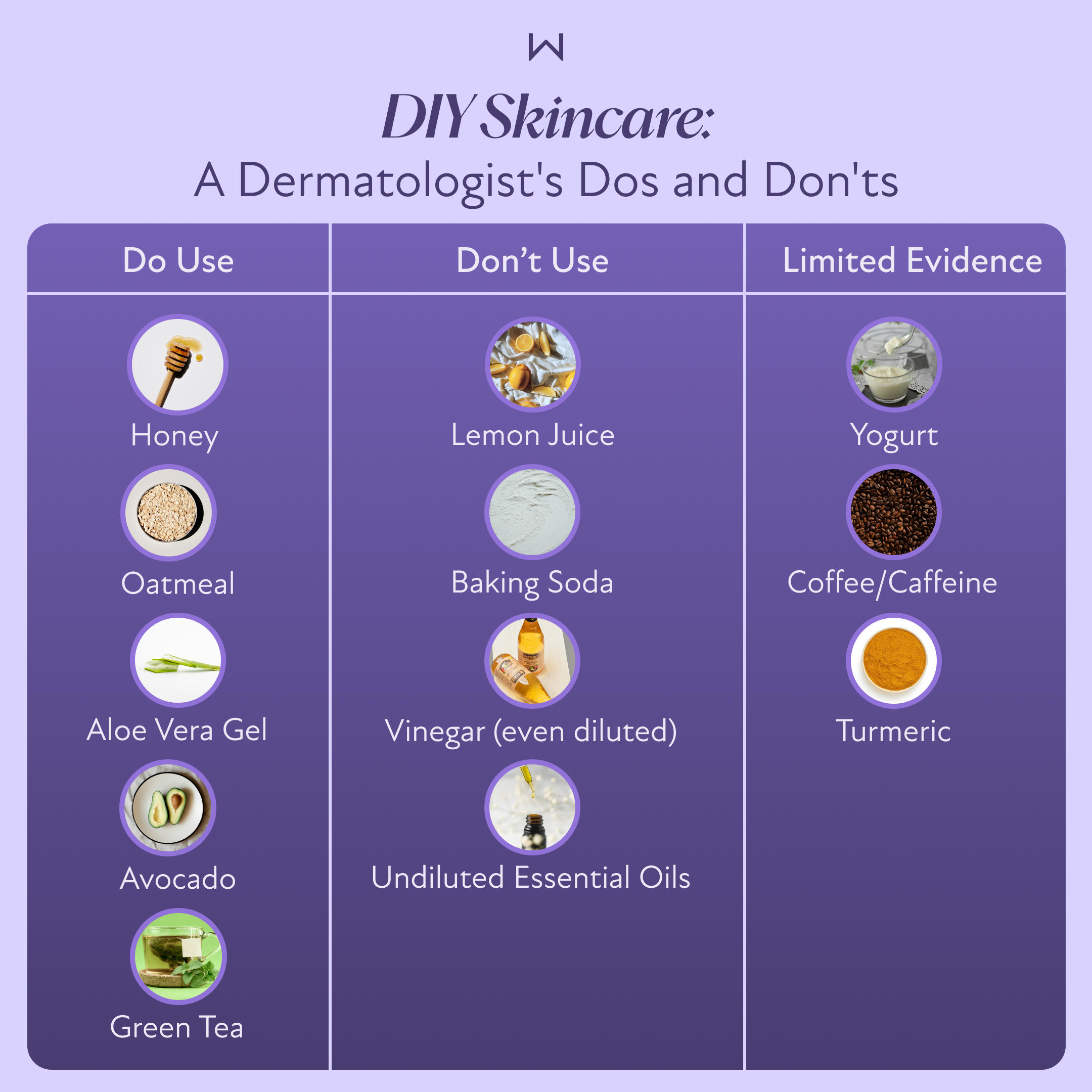
DIY Skincare: The Dermatologist’s Dos and Don’ts
(Note: Some natural ingredients have scientific evidence, but dermatologists do not generally recommend DIY skincare as a first-line treatment.)
Do Use (Generally Safe) | Don’t Use (Risk of Harm) | Evidence Exists, But Limited |
Honey Hydrates and softens skin | Lemon Juice Too acidic, can burn skin | Yogurt Contains lactic acid and probiotics, but evidence is stronger for formulated products |
Oatmeal Soothes irritation and itch | Baking Soda Too alkaline, disrupts skin barrier | Coffee/Caffeine Shown to reduce puffiness in cosmetics, but coffee grounds are too abrasive for the face |
Aloe Vera Gel Calms redness and inflammation | Vinegar (even diluted) Can irritate or burn skin | Turmeric Has anti-inflammatory properties in studies, but messy and may stain skin |
Avocado Rich in healthy fats, vitamins, and antioxidants | Undiluted Essential Oils Risk of rashes and burns | |
Green Tea Polyphenols reduce redness and provide antioxidants |
When DIY Isn’t Enough: The Role of Professional Skincare
DIY skincare can help with mild dryness, redness, or breakouts. But for deeper wrinkles, cystic acne, or stubborn hyperpigmentation, prescription treatments are far more effective. Dermatologists often recommend the following treatments:(15)(16)(17)
Topical Retinoids (like Tretinoin): Boost collagen, smooth fine lines, and fade dark spots
Spironolactone: An oral medication that reduces hormonal acne by blocking androgen effects.
Hormone Replacement Therapy (HRT): Estrogen can improve both skin health and broader menopausal symptoms.
Professional-Grade Moisturizers and Sunscreens: An SPF of at least 30 is essential for long-term protection and dermal repair.
A certified dermatologist can also perform in-office treatments — like chemical peels, microneedling, or laser resurfacing — for results that no kitchen remedy can achieve.
Menopausal skin deserves both care and caution. While simple DIY remedies can offer gentle relief for dryness, redness, and irritation, it’s important to follow safety guidelines and know their limits. Dermatologists remind women that natural does not always mean safe, and homemade treatments should complement, not replace, proven medical therapies like estrogen therapy.
Skincare during menopause is less about chasing quick fixes and more about protecting the skin’s barrier for the long term. Combining safe at-home practices with expert guidance and professional treatments, when needed, can make all the difference in keeping skin resilient and healthy throughout this transition.
When DIY isn’t enough, personalized care can help.
Natural remedies can soothe mild changes, but most skin concerns need more than an at-home recipe. A personalized prescription treatment plan can target the root causes and deliver lasting, visible results.