
It often starts with small, frustrating moments — walking into a room and forgetting why, losing track mid-sentence, or searching for a word that just won’t come. For many women in perimenopause or menopause, these moments spark real concern: Is this normal? Or is it something more serious, like dementia?
This kind of forgetfulness and mental fuzziness, often called menopause brain fog, affects more than half of menopausal women and is closely tied to hormonal shifts.(1)
The good news: understanding what’s happening inside the brain makes it easier to manage — and even reverse.
Why Does Menopause Cause Brain Fog? The Estrogen-Brain Connection
The term brain fog is used to describe issues with memory, concentration, and focus. Signs can include the following:(1)(2)
Forgetfulness
Trouble concentrating
Confusion
Difficulty thinking clearly or solving problems
When it comes to women’s health, estrogen does far more than regulate reproductive function — it’s a key component in how the brain thinks, feels, and remembers. When estrogen levels decline during perimenopause and menopause, it directly affects how the brain produces energy, communicates between nerve cells, and manages stress.(3)
1. Estrogen powers the brain’s energy system.
The brain depends on glucose as its main source of fuel. Estrogen helps brain cells use that fuel efficiently to maintain healthy brain function. When estrogen drops, this process slows down, creating a kind of “energy shortage” in areas that control memory, focus, and word recall. Research from both Harvard Medicine and Weill Cornell Medicine has shown that this energy decline can contribute to cognitive symptoms often described as fog or fuzziness.(3)(4)
2. Estrogen supports neurotransmitters.
Estrogen stimulates the production of key neurotransmitters that regulate mood and cognition:(5)(6)(7)
Acetylcholine — essential for learning and memory
Serotonin and dopamine — vital for focus, motivation, balanced mood, and overall mental clarity
As estrogen declines, these chemical messengers become less active, leading to slower recall, difficulty concentrating, and increased forgetfulness.
3. Estrogen helps balance stress hormones.
Estrogen also regulates cortisol, the body’s main stress hormone. During menopause, lower estrogen levels can make it harder to control cortisol spikes, which may intensify feelings of mental fatigue or distraction. Daily pressures (whether from work, relationships, finances, or caregiving) elevate cortisol. Chronic stress further disrupts cognitive performance, creating a cycle that worsens brain fog.(8)

Estrogen is one of the most powerful neuroprotective hormones in the body. When estrogen levels fall, the brain responds to that change — but with the right treatment, it can recover.
Together, these changes explain why so many women describe brain fog as one of the most frustrating, yet often misunderstood, symptoms of menopause.
4. Estrogen helps sleep hygiene.
Sleep disturbances are a common contributor to menopause-related brain fog. Lower hormone levels affect the brain’s ability to regulate the sleep-wake cycle.
Estrogen helps promote restful sleep by supporting the production of serotonin and melatonin — hormones that influence circadian rhythm. When estrogen declines, this balance is disrupted, leading to lighter, more fragmented sleep. Over time, poor sleep can impair attention, memory, and problem-solving.(5)(7)
Is it brain fog or dementia? How to Tell the Difference
Worrying that forgetfulness might signal dementia is common, but menopause brain fog and dementia are very different conditions.
Menopause brain fog affects how efficiently the brain retrieves information — the memory is still there, just harder to access. Dementia, on the other hand, involves a progressive loss of stored information and the ability to learn new things.(4)(6)
Feature | Menopause Brain Fog | Early Dementia |
Memory Lapses | Temporary forgetfulness, like misplacing keys or losing train of thought | Persistent memory loss affecting daily life |
Word Recall | Difficulty finding words, but eventually remembering | Gradual loss of vocabulary and understanding |
Cognition | Slower thinking or difficulty focusing under stress | Noticeable decline in problem-solving or reasoning |
Progression | Fluctuates with hormones and stress | Steadily worsens over time |
Response to Treatment | Improves with rest, hormonal balance, and lifestyle changes | Requires medical management and ongoing care |
Early signs of dementia are indeed similar to menopausal brain fog symptoms, but for most, these lapses are temporary and related to hormonal changes — not dementia.
If memory issues seem to worsen or affect daily functioning, it’s important to speak with a specialized physician about it and learn more about memory loss and dementia during menopause.
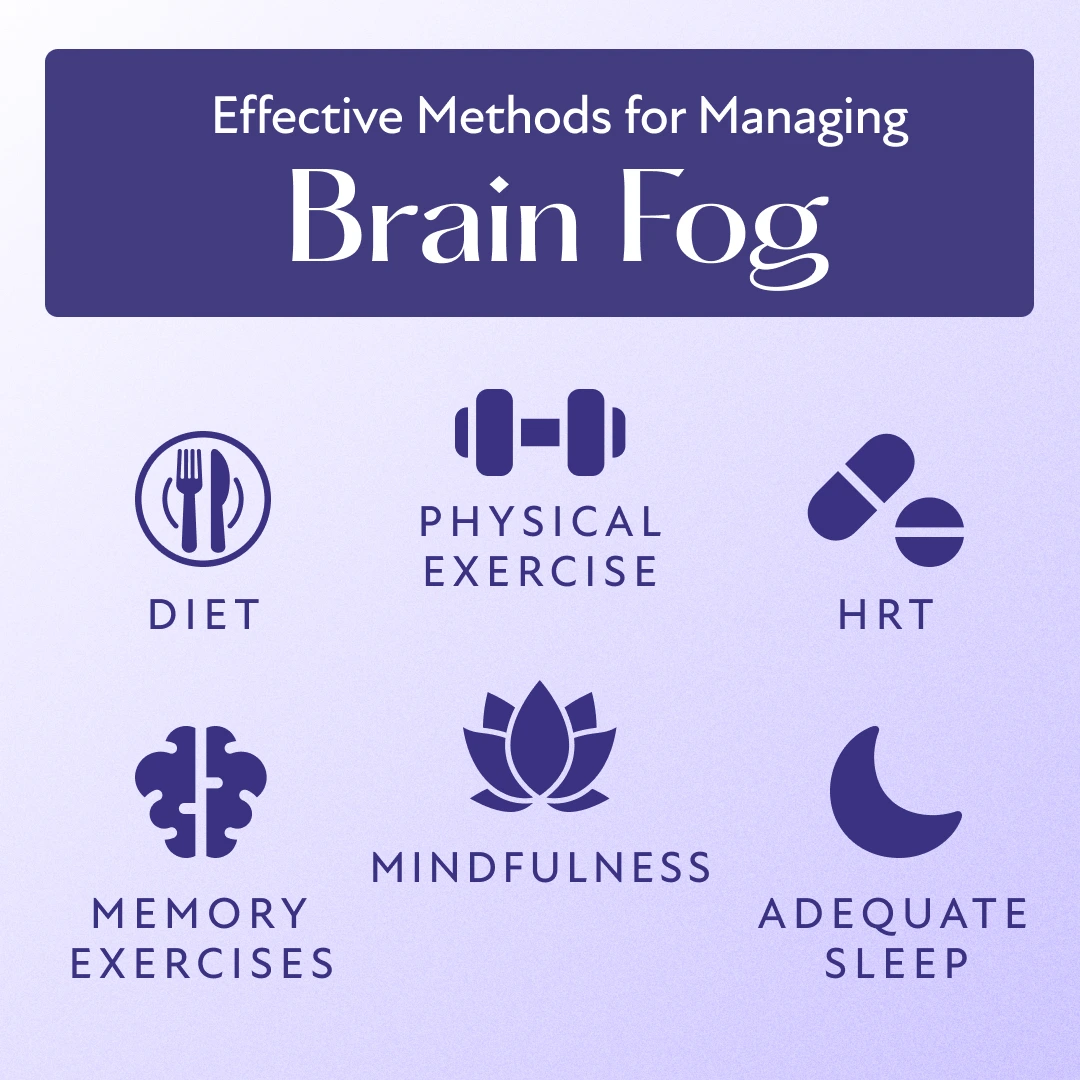
Effective Treatments for Menopause Brain Fog
Menopause brain fog isn’t something to simply live with. Once the hormonal connection is understood, there are clear, effective steps to restore clarity and focus.
Hormone Replacement Therapy (HRT): Addressing the Root Cause
Because estrogen plays such a critical role in brain health, restoring hormonal balance through menopause hormone therapy (HRT) can directly address the root cause of brain fog.
By restoring estrogen balance, HRT helps support the brain’s energy metabolism and function — improving memory, focus, and clarity. Studies show that estrogen therapy supports glucose metabolism in the brain, boosts neurotransmitter activity, and may improve cognitive performance and mood stability.(3)(5)
Many women notice that their thinking feels sharper and their concentration improves within a few weeks of starting therapy. A doctor can determine whether HRT is appropriate based on individual symptoms and medical history.
The Menopause Society says that, for individuals with a uterus, progesterone is prescribed alongside estrogen to maintain uterine health. Together, these hormones can also improve sleep, reduce night sweats, and stabilize mood — all of which help sharpen cognitive function.(5)(7)(9)
When estrogen levels are restored, many women describe feeling like themselves again — more focused, more productive, and mentally lighter.
Lifestyle Strategies for a Sharper Mind
Small, consistent habits can make a noticeable difference in mental clarity:
Exercising regularly: Aerobic and strength-based workouts improve blood flow and support hormone balance. It’s recommended to engage in 150 minutes of moderate activity weekly. High-intensity interval training (HIIT) can also boost cognitive performance by increasing oxygen supply to the brain.(10)(11)(12)
Eating for brain health: The Mediterranean diet — rich in polyunsaturated fatty acids, antioxidants, and whole foods — supports both brain and heart health. Foods like salmon, leafy greens, berries, and walnuts help reduce inflammation and improve memory.(13)
Prioritizing quality sleep: Poor sleep magnifies brain fog. Sleep disturbances are a significant concern that affect approximately 35%–60% of menopausal women, so achieving restful sleep is essential. Creating a cool, dark sleep environment, avoiding late-night caffeine and alcohol, and establishing a consistent bedtime routine are recommended for better rest.(7)
Cognitive Exercises and Stress Management
Keeping the brain active helps maintain mental agility. Crossword puzzles, reading, or learning a new language can all enhance memory and focus.
Mindfulness practices — including meditation, yoga, or deep-breathing exercises — help lower cortisol and improve attention span. Even 10–20 minutes of mindfulness a day has been shown to improve focus and working memory.(14)
Brain-Boosting Supplements
Certain nutrients can support cognitive health, though they should never replace medical treatment.(13)(15)(16)
Magnesium: Supports energy production and nerve communication
Omega-3 fatty acids: Promote brain cell flexibility and function
Ginkgo biloba: May improve blood flow to the brain, though evidence is mixed
It’s best to consult a physician before starting supplements, especially when using HRT or other medications.
Finding Clarity Again: What Comes Next
Menopause brain fog can be unsettling — but it’s not permanent. Once the hormonal connection is understood, it becomes much easier to take control. Estrogen plays an essential role in how the brain processes energy, regulates mood, and maintains focus. When its levels shift, the brain simply needs time and support to recalibrate. Feeling clearer and more focused again is entirely possible.
Restoring balance through hormone therapy, improving sleep, and nourishing the body with exercise and a healthy diet can all help the mind feel sharp again. Many women describe it as “getting their spark back” — a renewed sense of energy, memory, and motivation.
Every experience is unique. Taking a few minutes to explore personal symptoms is an easy first step toward understanding what the body needs to function at its best.
If you’ve entered the menopause transition and are struggling with brain fog, you don’t have to suffer in silence. Take the quiz to see if you’re an eligible candidate for HRT. Get started with Winona to take the first step toward feeling better.