For many women, menopause brings a seismic shift in mental health and self-identity. Feeling invisible, questioning abilities, or noticing changes in energy and mood are common experiences. While not every woman may experience it, low self-esteem during menopause is real. A 2023 study published in the National Library of Medicine found that women in perimenopause were more likely to have a lower self-worth than those before this stage.(1)(2)
Hormonal fluctuations can trigger emotional and cognitive shifts, such as mood disturbances, body image perceptions, sleep disruptions, or “brain fog,” which can all impact self-esteem.(1)
This article explores why self-esteem often dips during menopause and offers a structured, evidence-based toolkit for rebuilding confidence.
Why Menopause Can Affect Self-Esteem
Menopause is not just a physical transition; it affects the brain and emotions in ways that are clinically documented. The American College of Obstetricians and Gynecologists (ACOG) acknowledges that the menopause transition is linked to a higher risk of depression and anxiety, which can affect overall self-esteem during this stage of life. Understanding the drivers of confidence changes can help validate feelings and guide actionable strategies.(1)(3)
Hormonal Shifts and Brain Chemistry
Estrogen, progesterone, and testosterone all play crucial roles in brain function.(1)(4)(5)
Estrogen supports serotonin production, which stabilizes mood and promotes feelings of well-being.
Progesterone contributes to calm, restorative sleep.
Testosterone influences motivation and assertiveness.
When these hormones decline, many women experience anxiety, negative self-perception, low mood, and decreased drive. Hot flashes, night sweats, and sleep disruption intensify the impact by adding daily stress, which can all chip away at confidence.(1)(4)
These shifts are physiological, not personal failings, and recognizing their role is the first step in regaining self-esteem.

When estrogen declines, serotonin synthesis slows, dopamine becomes less efficient, and GABA activity can lower the brain’s natural calming effect. These neurochemical shifts explain confidence and mood changes during menopause as physiological responses, not a change in capability or character.
Physical Changes and Body Image
Menopause brings natural changes in body composition: weight gain or weight redistribution, changes in skin texture, reduced muscle tone, and shifts in energy levels. These shifts can shape how a woman sees herself and may contribute to feeling unattractive during menopause, particularly when physical changes feel sudden or unfamiliar.(1)(6)
Cultural emphasis on youth and beauty often amplifies this impact. Western culture tends to idealize youth, often portraying younger women as more valuable or visible, which can create pressure and feelings of invisibility. Women may experience a mismatch between their internal self-image and external appearance, contributing to reduced confidence.(1)(6)(7)
Cognitive Changes (“Brain Fog”)
Many women notice subtle cognitive shifts during menopause, including difficulty concentrating, forgetfulness, or slower recall. These “brain fog” symptoms are linked to hormonal changes affecting neurotransmitter balance.(1)(4)(8)
Even mild lapses in memory may feel alarming, especially for women managing careers, caregiving, or multiple responsibilities. This can result in self-doubt and worsen the impact on self-esteem.(1)(4)(8)
By keeping in mind that these changes are expected and biologically grounded, women can approach their emotional shifts with greater compassion and clarity.
A Practical Toolkit: 4 Ways to Rebuild Confidence
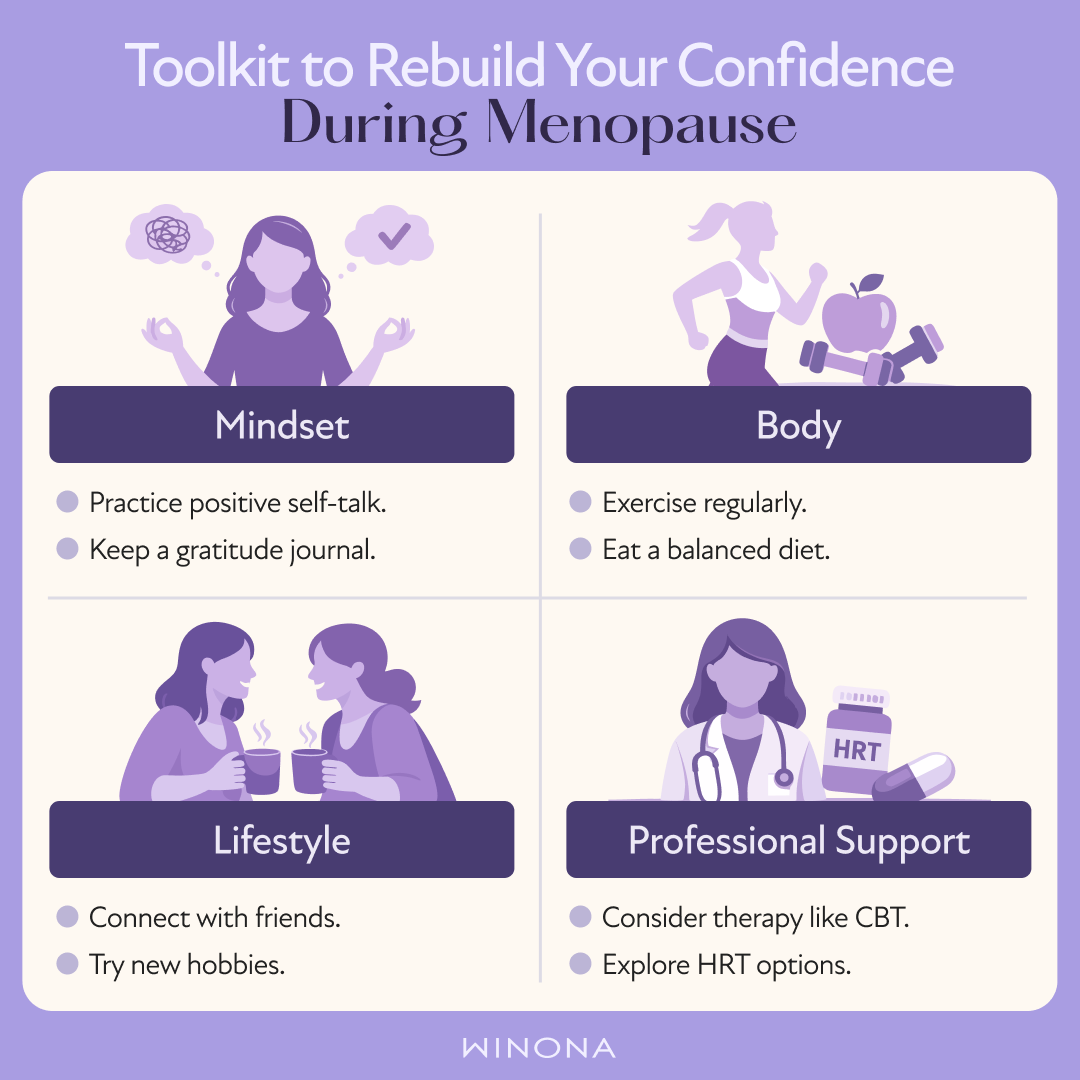
Rebuilding self-esteem during menopause benefits from a structured approach that addresses the mind, body, lifestyle, and professional support. These four categories provide actionable strategies grounded in research and real-world experience.
1. Master Your Mindset
Cognitive strategies are essential for countering the negative self-talk and self-doubt that can arise during menopause.(3)(9)(10)
Expect and Own Self-Doubt:
Recognizing that dips in confidence are common helps normalize the experience. Women can reframe self-criticism as temporary and situational rather than a reflection of worth.
Practice Positive Self-Talk:
Replacing internal negativity with affirming statements supports a resilient mindset. For example, noting personal strengths, past successes, and ongoing achievements reinforces self-esteem.
Journal and Practice Gratitude:
Keeping a journal of accomplishments and moments of joy creates a tangible record of competence and progress. Gratitude exercises — highlighting things going well — can shift focus from perceived deficits to strengths.
Practice Mindfulness and CBT Techniques:
Mindfulness exercises help women observe thoughts without judgment, reducing emotional reactivity. Cognitive behavioral therapy (CBT) provides structured tools to identify negative thought patterns and reframe them in positive, actionable ways.
These mindset shifts build a foundation for confidence that persists even when physical symptoms fluctuate.
2. Harness the Power of Your Body
Physical well-being directly supports emotional resilience and self-esteem.(1)(4)(7)(11)
Regular Exercise:
Regular movement stimulates endorphins, improving mood and reducing anxiety. Strength training, walking, yoga, or even a 10-minute daily stretch can enhance energy and body confidence. Exercise also preserves muscle tone and bone health, countering changes that can impact body image.
Nutrition:
Balanced meals support both brain and hormone function. Foods rich in omega-3 fatty acids, B vitamins, and protein help stabilize mood and energy. Including phytoestrogen-rich foods, like soy, flaxseeds, or legumes, can help mimic some estrogen activity in the body.
Sleep Hygiene:
Quality sleep reinforces emotional regulation and cognitive clarity. Strategies include maintaining a consistent sleep schedule, minimizing screen exposure before bed, and using supplements like magnesium or melatonin under professional guidance.
Stress Reduction:
Physical relaxation techniques — like deep breathing, progressive muscle relaxation, or tai chi — reduce physiological stress, which can otherwise amplify self-doubt and low mood.
By maintaining physical health, women can directly improve the brain chemistry and energy levels that underlie confidence.
3. Adjust Your Lifestyle
The Menopause Society notes that behavioral changes and daily routines influence self-esteem and the perception of personal control.(4)(6)(12)
Social Connection:
Isolation can exacerbate feelings of low self-worth. Joining support groups, connecting with peers online, or spending time with trusted friends strengthens emotional resilience. Shared experiences validate feelings and normalize the menopause journey.
Hobbies and Personal Growth:
Engaging in activities that bring joy or a sense of achievement fosters self-expression and competence. Learning a new skill, volunteering, or dedicating time to a creative pursuit reinforces personal value.
Stepping Out of Comfort Zones:
Trying new experiences or setting small challenges encourages adaptability and reinforces self-efficacy.
Stress Management:
Mindful breathing, meditation, and structured relaxation practices reduce the impact of daily pressures. Prioritizing personal time, setting boundaries, and saying “no” when necessary reinforces autonomy and self-respect.
Lifestyle adjustments complement mindset and physical strategies, creating a holistic approach to rebuilding confidence.
4. Seek Professional Support
When self-help strategies alone are insufficient, professional mental health support is a sign of strength and empowerment.
Menopause-Informed Therapy:
CBT and other evidence-based therapies tailored to menopause address both mood and self-esteem challenges. Mental health therapy provides structured techniques to manage anxiety, negative self-talk, and identity shifts.(9)
Hormone Therapy (HT):
For some women, restoring hormone balance can relieve key symptoms affecting self-esteem, including hot flashes, sleep disruption, and mood instability.
HT, sometimes called hormone replacement therapy (HRT) or menopausal hormone therapy (MHT), addresses the root physiological drivers of emotional and cognitive changes, allowing mindset and lifestyle strategies to be more effective.(8)
Professional support does not replace personal strategies — it enhances their effectiveness by creating a stable foundation for emotional and cognitive function.

Self-Esteem Shifts are Normal
Dips in confidence during menopause are common, real, and influenced by both biological and social factors. Recognizing that self-esteem changes are not personal failings is the first step toward regaining a sense of balance.
By combining mindset techniques, body-focused strategies, lifestyle adjustments, and professional support, women can rebuild confidence and reconnect with their strengths. Menopause can become a phase of growth, reflection, and renewed self-awareness rather than loss.
Reclaiming confidence is possible. With the right tools and support, self-esteem can not only return — it can flourish.
Experiencing loss of self-esteem and confidence in menopause?
Take the quiz to assess your symptoms and discover whether medical support could help.
Learn about hormone therapy and other treatment options.
Join the Winona Women’s Facebook Group to connect with other women on the same journey and benefit from support and encouragement.