The American Psychological Association says that 77% of adults experience moderate to high levels of stress, but this statistic does not account for the added physiological changes and hormone fluctuations of perimenopause and menopause. Many menopausal women notice that stress feels different during this stage of life — shorter patience, heightened tension, and a sense of being constantly on edge. These experiences are real and biologically driven, not a personal failing.(1)
Hormonal shifts during menopause influence how the brain and body respond to stress. Fluctuating estrogen affects neurotransmitters involved in mood and calm, while cortisol levels may remain persistently elevated. Together, these changes can make coping mechanisms that once worked feel less effective.(2)
The Science of Menopause Stress: Why do women feel this way?
Menopause stress is not simply emotional. It reflects measurable changes in hormone signaling that affect the nervous system, sleep, and mood regulation.(3)
The Estrogen–Cortisol Connection
Estrogen plays a stabilizing role in the body’s stress response. It helps regulate cortisol production and supports serotonin, a neurotransmitter linked to calm and emotional balance. During perimenopause and menopause, estrogen levels fluctuate and then decline. As this regulation weakens, the adrenal glands may release cortisol more easily and for longer periods.(2)(3)

When estrogen drops, cortisol loses one of its natural barriers. The body stays in a low-grade stress response, even when there’s no immediate threat.
Over time, this imbalance can keep the nervous system in a near-constant state of fight-or-flight.
The Impact on the Body and Brain
These changes affect both physical function and mental health, shaping how stress is experienced day to day.(2)
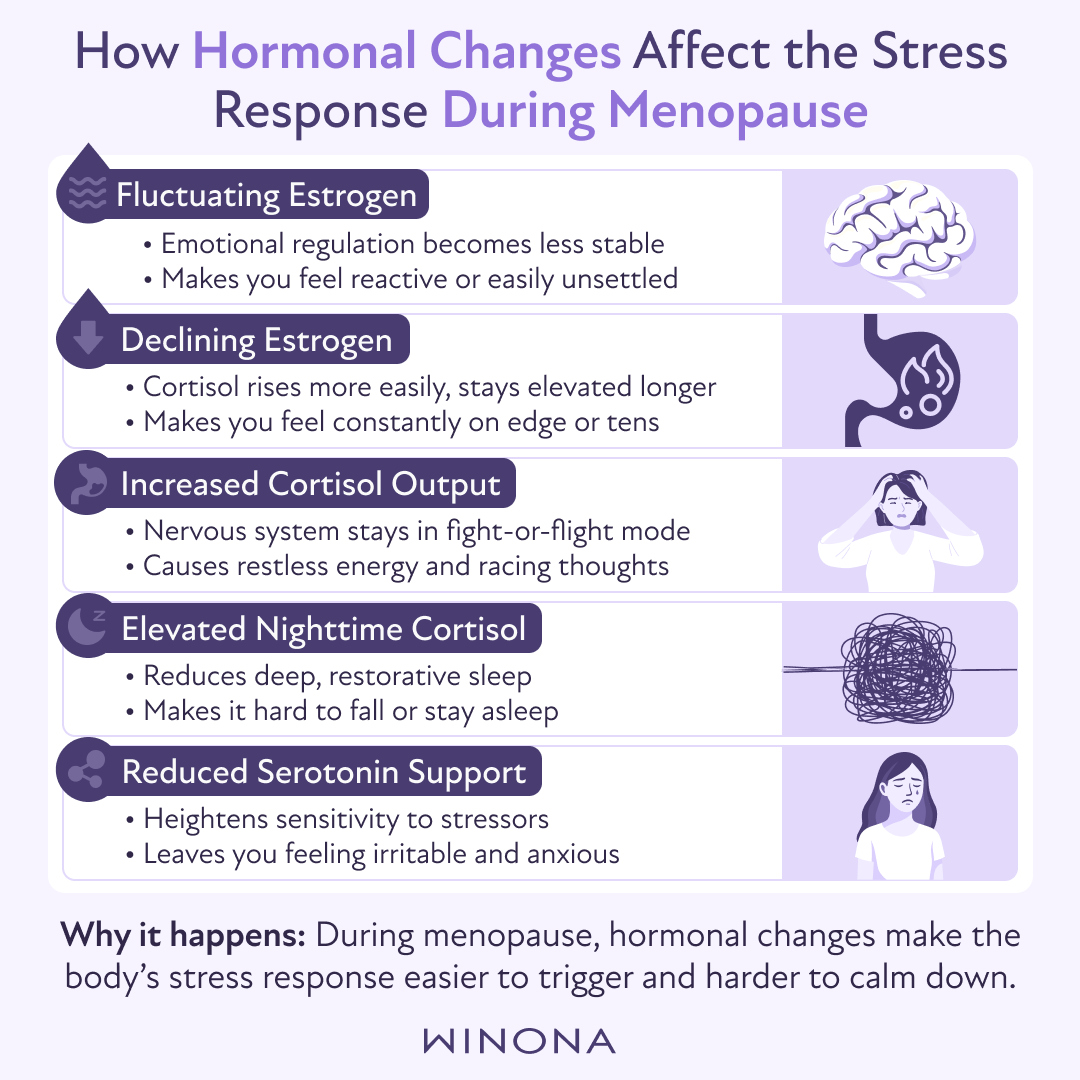
Elevated cortisol affects multiple systems at once:(2)(3)(4)
Sleep disruption: High nighttime cortisol interferes with deep, restorative sleep.
Mood changes: Reduced serotonin support can contribute to irritability and anxiety.
Energy imbalance: Many women feel both restless and fatigued at the same time.
Stress sensitivity: Small challenges may trigger outsized reactions.
Understanding this hormonal mechanism is essential. It reframes menopause stress as a physiological process with clear pathways for management.
Stress Symptoms vs. Menopause Symptoms
Stress-Related Symptoms | Common Menopause Symptoms | Where They Overlap |
Muscle tension | Joint stiffness or body aches | Increased physical tension and discomfort |
Trouble falling asleep | Night sweats or insomnia | Disrupted sleep patterns |
Racing thoughts | Anxiety or irritability | Heightened nervous system activity |
Fatigue | Low energy or exhaustion | Reduced resilience and stamina |
Headaches | Hormone-related headaches | Changes in blood vessel regulation |
Feeling on edge | Mood changes | Altered stress-response signaling |
Poor concentration | Brain fog | Reduced cognitive clarity |
Rapid heartbeat | Hot flashes | Stress hormones affect temperature and heart rate |
Why this matters:
This overlap explains why stress symptoms and menopause symptoms often feel the same and why addressing both lifestyle factors and hormonal balance is key to effective relief.
Evidence-Based Tips for Managing Stress
Effective menopause stress relief works best when strategies are layered and consistent. The following approaches are organized into three practical categories.
1. Mind–Body Techniques
These strategies directly calm the nervous system and reduce cortisol signaling.
Practicing Deep Breathing Exercises
Slow, diaphragmatic breathing activates the parasympathetic nervous system. Studies show it lowers heart rate, blood pressure, and cortisol while improving mental clarity and emotional regulation.(5)(6)
Trying Guided Meditation or Mindfulness
Mindfulness-based practices help retrain the stress response. Clinical trials supported by the American Psychological Association show that regular meditation reduces anxiety and perceived stress during menopause.(7)(8)
Incorporating Gentle Yoga or Stretching
Gentle movement combines breath, balance, and muscle relaxation. Research links yoga to improved sleep quality and lower stress hormone levels in midlife women.(9)
Spending Time in Nature
Time outdoors reduces cortisol and supports nervous system recovery. Even brief daily exposure to green spaces has measurable calming effects.(7)
2. Lifestyle Adjustments
Daily habits shape how the body processes stress over time.
Prioritizing a Consistent Sleep Schedule
Maintaining regular sleep and wake times helps stabilize cortisol rhythms. Better sleep supports mood, focus, and resilience.(4)(9)(10)
Fueling the Body with a Balanced Diet
Whole foods rich in protein, fiber, and healthy fats support blood sugar stability, which directly influences cortisol release.(7)
Engaging in Regular Physical Activity
Regular exercise lowers baseline cortisol levels and improves serotonin signaling. Movement also stimulates the release of endorphins, which support mood stability and stress resilience. Walking, swimming, and cycling are particularly effective.(7)(9)(11)
Connecting with a Support System
Social connection buffers the stress response. Studies show that shared experiences and emotional support reduce stress markers during menopause.(7)
3. Strategic Interventions
These approaches focus on proactive management and long-term support.
Learning to Say “No” and Set Boundaries
Setting boundaries and expressing needs helps preserve personal well-being. Saying "no" to non-essential commitments protects physical and emotional energy. Open communication with family and colleagues about needs helps relieve additional pressures and is associated with lower chronic stress levels.(2)(12)
Considering Cognitive Behavioral Therapy (CBT)
CBT helps reframe stress responses and improve coping skills. It’s recommended by multiple menopause societies for anxiety and sleep problems.(7)(13)
Limiting Tobacco, Alcohol, and Caffeine
These substances can raise cortisol and worsen sleep quality. Reducing their intake often leads to steadier energy and a calmer mood in the short and long term.(4)(14)(15)
Exploring Hormone Replacement Therapy (HRT) to Address the Root Cause
Lifestyle strategies ease symptoms, but they do not correct the hormonal imbalance. For many menopausal women, HRT, also known as hormone therapy (HT), helps maintain estrogen levels, which in turn can regulate cortisol and promote a healthier stress response. Major medical organizations recognize HT as an effective option when appropriately prescribed.(4)
Moving Forward with Less Stress
Managing stress during menopause often starts with daily habits, mindfulness, and supportive routines. These strategies help build resilience and improve quality of life. For women whose symptoms persist, addressing the underlying hormonal changes may provide more lasting relief. A personalized evaluation can clarify whether hormonal support is appropriate and help guide next steps.
Take the next step:
Take the Menopause Health Quiz to better understand symptoms and explore personalized options with clinical guidance.