Fatigue during perimenopause and postmenopause is common and well-documented. Research shows that 85% of menopausal women and 46% of perimenopausal women report significant physical and mental exhaustion, compared to 19% of women who have not yet reached this stage.(1)
This experience can feel different from ordinary tiredness. Normal tiredness usually improves with rest, a lighter schedule, or an early night. Menopause fatigue does not. It lingers, returns day after day, and affects concentration, motivation, and overall quality of life. Many women describe feeling drained in a way that no amount of sleep or downtime seems to fix.(1)(2)
This persistent, unrelenting exhaustion is not simply “normal aging.” It reflects the deep metabolic, neurological, and hormonal shifts that happen during the menopausal transition.

The Hormonal Cascade Behind Menopausal Exhaustion
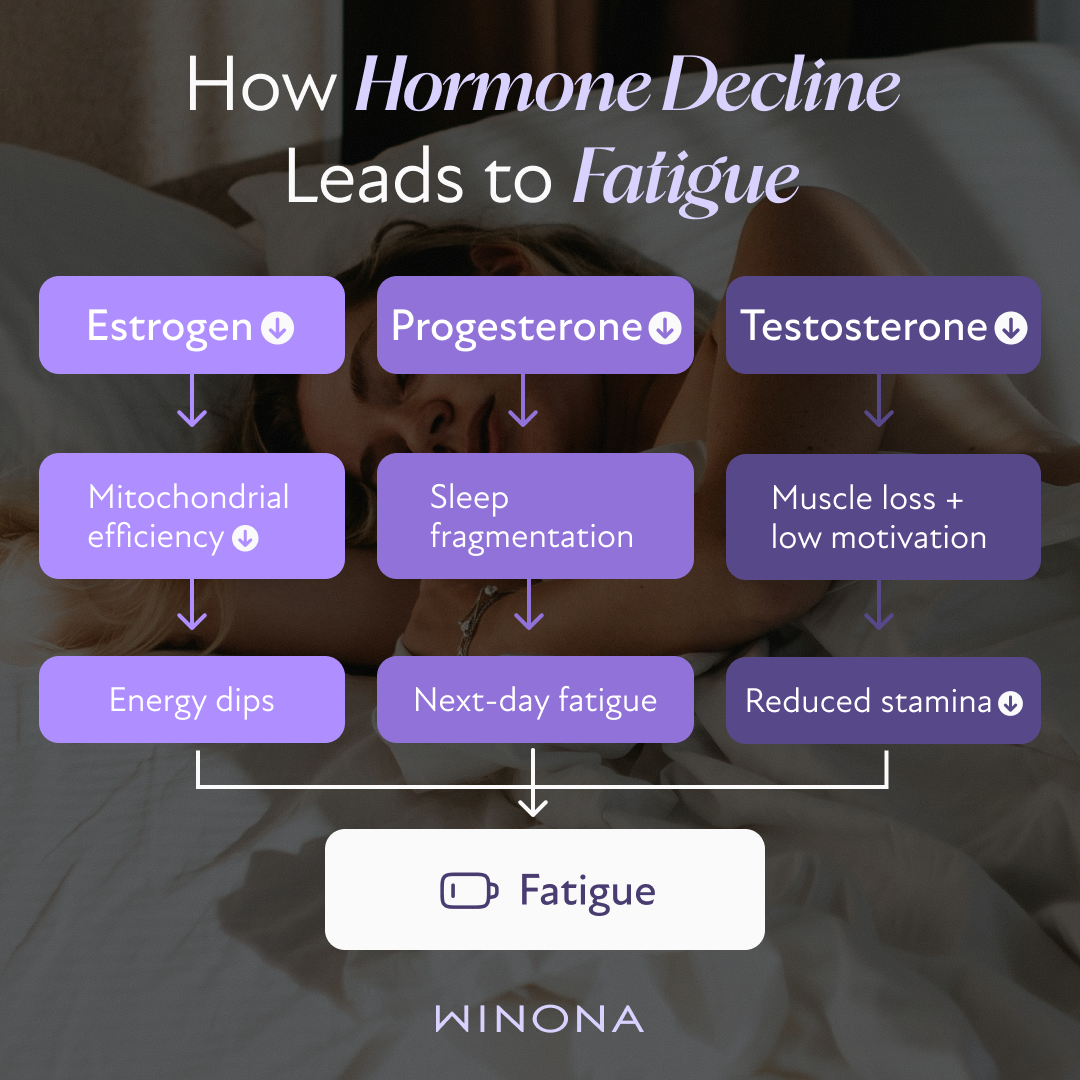
Menopause fatigue rarely stems from a single hormone acting alone. Instead, it develops from a cascade of interconnected changes involving estrogen, progesterone, and sometimes testosterone. These hormones influence cellular energy production, sleep architecture, metabolism, inflammation, and even the brain’s motivation and focus centers. When they fluctuate or decline, they create an imbalance, and the combined effect can be profound.(3)(4)
Estrogen supports energy at the cellular level. It helps cells turn nutrients into usable energy, so when estrogen drops, the body has a harder time producing and sustaining steady fuel for energy.
Progesterone activates calming receptors that slow neural activity in the brain, making it easier for the body to stay in deep, continuous sleep. As levels fall, sleep becomes lighter and more disrupted.
Testosterone, though present in smaller amounts in women, plays a key role in vitality, mental clarity, and motivation by helping neurotransmitters and muscles use energy efficiently. Its decline reduces stamina and drive.
This cascade leads to a pattern many women recognize: disrupted nights, early waking, daytime sluggishness, and difficulty completing everyday tasks. Fatigue may also intensify secondary symptoms like brain fog, irritability, and reduced concentration, creating a cycle that feeds on itself.

We can’t just point to one hormone. Estrogen decline affects how the body’s cells produce energy, progesterone decline fragments sleep, and unbalanced testosterone can reduce motivation and drive. Together, they create a perfect storm for fatigue.
The Role of Estrogen in Cellular Energy
Estrogen is central to the body’s energy systems. It improves how cells use glucose, supports mitochondrial function, and regulates cortisol — the hormone that helps the body respond to daily stressors and maintain a steady rhythm of energy throughout the day.(4)(5)
Estrogen also supports neurotransmitters like serotonin and dopamine, which influence focus, mood balance, and motivation. When estrogen fluctuates or declines, the normal regulatory balance of these systems is disrupted.(4)
This results in sudden dips in energy levels, a greater sense of physical heaviness, and slower cognitive processing.
Many women notice that their energy "crashes" become more frequent during perimenopause, especially during months with larger hormonal shifts. These changes can also heighten sensitivity to stress, making daily tasks feel more draining than before.(1)
The Role of Progesterone in Sleep Quality
Progesterone acts as a natural calming hormone. It promotes muscle relaxation, supports healthy breathing during sleep, and helps maintain stable sleep cycles. During perimenopause and postmenopause, progesterone levels fall, and the body loses some of this built-in support.(3)
Lower progesterone makes fragmented sleep more likely. Women may wake repeatedly, struggle to fall back asleep, or experience shallow sleep that does not restore energy. Hot flashes and night sweats (driven by shifts in estrogen) further disrupt sleep architecture.(3)(6)
Research shows that reduced progesterone also increases the risk of sleep apnea, a condition marked by repeated pauses in breathing during the night. Even mild breathing irregularities can interrupt deep sleep and contribute to next-day exhaustion.(7)
These sleep disruptions directly feed into daytime fatigue, mental fogginess, and reduced stamina.
The Overlooked Role of Testosterone in Vitality
Although testosterone is often thought of as a male hormone, it’s essential for women’s energy, physical resilience, and sexual drive.
Research from the Endocrine Society also shows that when estrogen and progesterone drop, the body can shift into a state where testosterone becomes relatively higher. In premenopausal women, shorter sleep duration has been linked to this pattern of relatively higher testosterone, suggesting that the balance between these hormones may further affect fatigue.(3)
During menopause, testosterone levels begin to gradually decline. Lower levels may lead to reduced endurance, difficulty maintaining muscle mass, slower recovery after activity, and a diminished sense of drive. Many women describe feeling “flat” or sluggish in a way they never experienced before.(8)
DHEA, a hormone produced by the adrenal glands, serves as a precursor to testosterone. As DHEA levels fall with age, testosterone production also decreases. Supporting this pathway can help some women regain energy and sexual drive, but treatment decisions should always be guided by a physician.(6)
A Critical Safety Check: When to See a Doctor
Fatigue is a common symptom of menopause, but The Menopause Society points out that it can also signal other medical conditions that require attention. A thorough evaluation is an essential first step in any safe treatment plan.(9)(10)
Several conditions can mimic menopause fatigue:
Anemia: Low iron or vitamin B12 can reduce oxygen delivery to tissues, leading to persistent exhaustion.
Thyroid Disorders: Both hypothyroidism and hyperthyroidism influence metabolism, body temperature, and energy regulation.
Clinical Depression: Depression can cause sleep disruption, poor concentration, and reduced stamina, which can closely resemble menopause symptoms.
Sleep Apnea: Repeated pauses in breathing at night cause frequent awakenings and poor-quality sleep.
Chronic Fatigue Syndrome or Autoimmune Conditions: These disorders involve deeper immune-system changes and require targeted care.
Diabetes or Prediabetes: Blood sugar fluctuations can cause significant swings in energy levels.
Individuals should seek medical evaluation if any of the following occur:
Fatigue develops suddenly
Fatigue worsens instead of stabilizing
Fatigue interferes with daily functioning
Fatigue includes symptoms like unintentional weight loss, shortness of breath, a rapid heartbeat, or a persistent low mood
A full assessment helps confirm whether menopause is the primary cause and guides a safe, effective treatment plan.
The Role of Hormone Therapy in Restoring Energy
Hormone therapy (HT), also known as hormone replacement therapy (HRT), addresses the root cause of menopause fatigue by restoring declining hormone levels. By stabilizing estrogen, progesterone, and sometimes DHEA/testosterone, HT can help restore the hormonal environment needed for steady energy, clear thinking, and restful sleep.(6)
Estrogen Therapy helps reduce night sweats and hot flashes, which often improves sleep continuity. Better sleep directly supports daytime concentration and stamina. Estrogen also supports the brain’s energy pathways, helping reduce the “wired-but-tired” feeling many women experience.
Progesterone Therapy can promote deeper, more restorative sleep. Restful sleep is one of the most powerful tools for improving fatigue.
Testosterone or DHEA Therapy may help with motivation, physical endurance, and cognitive focus in women with documented deficiencies.
Some women notice an initial increase in tiredness during the first week or two of HT as the body adjusts. This early dip is usually temporary and improves as hormone levels stabilize.
A physician can help determine which combination of hormones is most effective based on symptoms, medical history, and treatment goals.
Supportive Strategies for Managing Menopause Fatigue
While hormone therapy addresses the underlying cause of menopausal fatigue, supportive lifestyle strategies can further improve energy and quality of life. These approaches help stabilize blood sugar, support sleep, and reduce strain on the body.
Strategic Nutrition for Stable Energy
Consistent energy depends on steady blood sugar and adequate nutrients. Protein supports muscle strength and satiety. Iron-rich foods help oxygen transport. Healthy fats support hormone production and brain function.(11)
Balanced meals include the following:
Lean protein sources (chicken, turkey, fish)
Whole grains (brown rice, quinoa, whole wheat)
Vegetables & iron-rich foods like leafy greens and legumes
Omega-3–rich sources like fatty fish or plant-based options
Limiting refined carbohydrates and sugary snacks also helps prevent rapid energy swings that contribute to daytime crashes.
Movement to Generate Energy
Gentle and consistent movement is one of the most reliable ways to improve energy during menopause. Even low-impact activities (walking, stretching, yoga, swimming) enhance blood flow, reduce stiffness, and support the release of endorphins that help stabilize mood and energy.(12)
Shorter, regular sessions are often more effective than intense workouts. Movement also improves sleep quality, which directly supports daytime vitality.(12)
Optimizing Sleep Hygiene
Thoughtful sleep habits can help counter the sleep disruptions common in menopause.
Key strategies from the National Institute of Aging include the following:
Maintaining a consistent bedtime
Creating a cool, dark sleeping environment
Limiting screens before bed to protect melatonin production
Using breathable bedding to help reduce night sweats
Reserving the bedroom for rest to reinforce healthy sleep cues
These practices help the body transition more smoothly into deeper sleep, even when hormones are fluctuating.(13)
The Path to Restored Energy
Menopause fatigue is real, common, and deeply disruptive, but it’s also a treatable part of women's health. Understanding its hormonal roots provides clarity and direction. A thorough medical evaluation ensures that treatable conditions, such as thyroid disease or anemia, are not missed. For many women, hormone therapy offers meaningful relief by restoring balance and improving sleep.
With expert guidance and supportive daily habits, women can regain their strength, clarity, and vitality.